The water of the Bay of Kotor was so still it looked like a sheet of dark glass, reflecting the jagged limestone peaks that shoot straight up from the shoreline like a scene from a fantasy novel. I was sitting on a stone wall in Perast, dangling my feet over the edge while a local orange cat tried to convince me to share my breakfast. In the distance, I could see a massive cruise ship lumbering toward the main port, its decks packed with people who had paid thousands of dollars to be herded like cattle through the same three gift shops. Meanwhile, I had spent the morning swimming in a cove I found by accident and eating a warm, flaky burek that cost less than a bus ticket. It’s the kind of place that makes you want to delete your social media and just disappear into the mountains, especially once you realize your bank balance isn't screaming in agony.
Most Americans and Western Europeans are still stuck on the idea that a "Mediterranean" vacation requires a five-star budget in Italy or France. They spend their life savings to sit on a crowded beach in Positano where a bottle of water costs six euros. I took a bus across the border into Montenegro and found the same sapphire water and medieval stone architecture for a third of the price. My guesthouse was a five-hundred-year-old stone building with a terrace overlooking the bay. In a major tourist hub, a room like this would be a "deluxe suite" starting at four hundred a night; here, I paid fifty dollars and the owner gave me a glass of homemade brandy as a welcome drink.
The price gap becomes almost comical when you sit down for dinner. I found a small tavern tucked into a narrow alleyway behind the St. Tryphon Cathedral. I ordered a massive platter of "black risotto"—squid ink rice loaded with fresh calamari—and a glass of local Vranac wine. The bill was twelve dollars. In Dubrovnik, just two hours up the coast, that same meal would be thirty-five dollars and you'd have to fight three influencers for a table. The waiter actually had time to talk to me about the best mountain trails instead of rushing me out to flip the table for the next group of tourists. If a restaurant has a guy out front waving a menu at you, keep walking; the real gems are the ones where the menu is only in the local language and the lightbulbs are a little too dim.
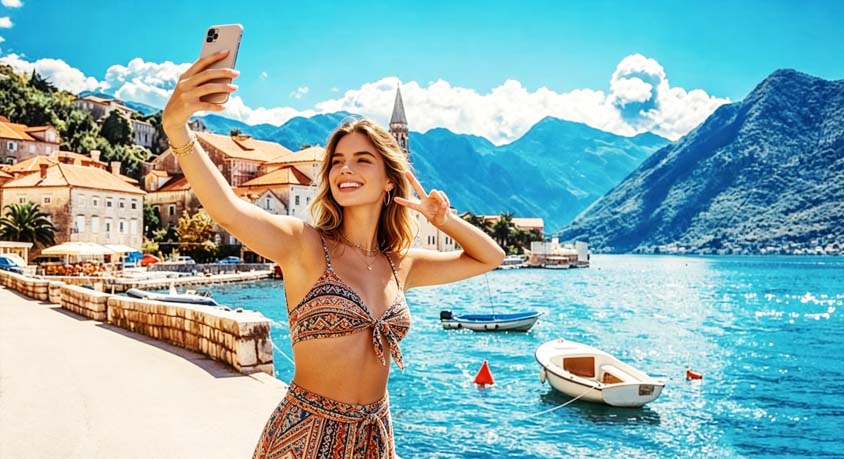
One of my favorite "anti-tourist" moves was skipping the expensive boat tours to the Blue Grotto and instead hiking the ladder of Kotor. It’s a zigzagging ancient trail that climbs the mountains behind the city. Most people pay eight euros to walk the fortress walls with a thousand other people. I took the "back way" for free, passing old stone ruins and a tiny cheese shop run by a farmer who lives halfway up the mountain. For five euros, he gave me a plate of smoked prosciutto and goat cheese that tasted like the mountain air itself. I sat on a rock overlooking the entire bay, watching the tiny cruise ships below, feeling like I had won a game no one else knew we were playing.
I also spent a day in the town of Tivat, but I stayed far away from the "Porto Montenegro" area where billionaires park their yachts. Just ten minutes away, there are small pebble beaches where the locals go. There are no cabanas for rent, no "VIP" sections, and no one trying to sell you a designer watch. I spent three dollars on a huge slice of pizza and a soda, and I had a view of the sunset that was identical to the one the guy on the hundred-million-dollar yacht was seeing. It’s a blunt reminder that the ocean doesn't care how much money you have in your pocket; the water feels exactly the same.
If you’re planning a trip here, avoid July and August like the plague. The humidity is thick, the narrow streets of the Old Town become a bottleneck of sweaty tourists, and the "locals' prices" mysteriously vanish. I visited in late May, when the wildflowers were blooming on the cliffs and the water was just crisp enough to be refreshing. You can actually hear the birds instead of the constant hum of air conditioners and tour bus engines. It’s the difference between seeing a postcard and actually living inside of one.
The best parts of Europe aren't the ones with the most hashtags; they’re the ones where you can still hear your own footsteps on the stones. You don't need a massive budget to see the world, you just need to stop going where the brochures tell you to go.