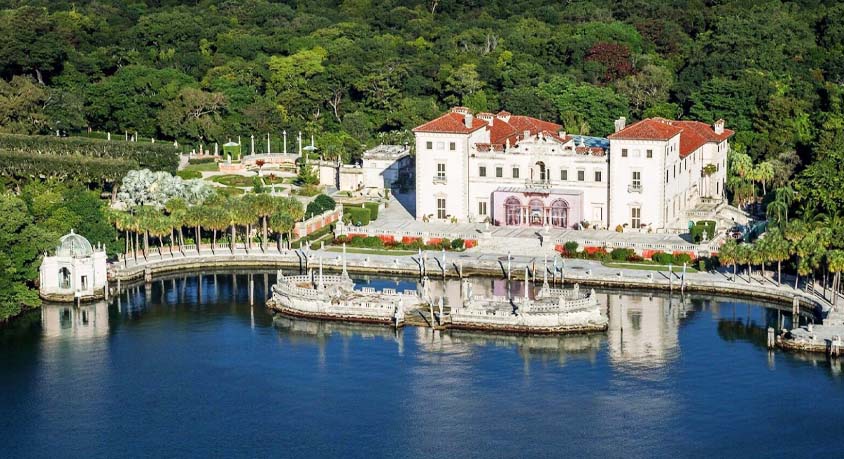
The first glimpse of Vizcaya, through the iron gates on South Miami Avenue, stops you mid-step. A Venetian-style palace, complete with ornate stonework and a moat, rising from the subtropical foliage like a European daydream imported piece by piece a century ago. The assumption, born from a lifetime of overpriced Miami experiences, is that something this grand, this Instagram-famous, must come with a correspondingly grand price tag—and that the experience will be a rushed, crowded shuffle through roped-off rooms. I approached the ticket counter with the grim resignation of someone about to surrender a small fortune for a glimpse of Gilded Age excess. What I discovered, by visiting strategically and ignoring the herd, was a place where $25 buys not just access to a mansion, but a full day of wandering through one of America's most spectacular waterfront gardens, with change left over for a Cuban coffee.
The moment you pay the $25 admission (slightly less for seniors and students), the cost comparison game becomes surprisingly pleasant. That's roughly the price of a single mediocre dinner in South Beach, or a round of overpriced cocktails at a rooftop bar with a view that can't touch Vizcaya's. For that same $25 in a city like Chicago, you might get into the Art Institute's general collection, but you won't get the sprawling, 10-acre tropical gardens, the waterfront loggia, or the ability to spend six hours finding your own private corner.
The food situation requires forethought. Vizcaya's on-site cafe serves acceptable sandwiches and salads, but at $12-$15 for basic fare, it's priced for convenience, not value. The local move is to pack a picnic. The gardens have numerous shaded benches and hidden alcoves perfect for a quiet lunch, and the nearby Coconut Grove neighborhood, a five-minute drive away, offers excellent and affordable options. Grab a Cuban sandwich and a pastelito for under $10 from a local bakery, and you've just engineered a museum lunch that rivals any restaurant experience for a fraction of the cost.
For accommodation, the surrounding Coral Gables and Coconut Grove areas are charming but pricey, with mid-range hotels easily hitting $250-$350 a night—roughly what you'd pay for a similar room in a mid-sized American city's downtown, but here you're paying for the palm trees. A smarter play is to stay slightly further out in areas like South Miami or even Doral, where rates dip to $150-$200, and drive the short, straightforward distance to Vizcaya.
Transportation to the museum itself is refreshingly flexible. The Vizcaya Metrorail station is literally across the street, making this one of Miami's few major attractions accessible without a car. A $2.25 Metrorail fare from downtown or Brickell delivers you to the doorstep, bypassing the $10-$15 ride-share surge pricing entirely. Parking at Vizcaya costs $8 for non-members, a reasonable fee in a city where valet lots routinely demand $20.
While most visitors dutifully follow the audio tour through the mansion's 34 furnished rooms, the real magic hides in plain sight on the south side of the estate. Here, tucked behind a hedge maze of native plants, sits a small, forgotten boat basin where Vizcaya's original gondolas once docked. The stonework here is more weathered, the crowds thinner, and the view across Biscayne Bay uninterrupted by anything but passing sailboats. This is where you can sit for an hour watching the light shift across the water, entirely alone on a peak season afternoon.
Further into the gardens, past the formal European-style terraces, lies the "Secret Garden"—a walled enclosure originally designed as a cutting garden for fresh flowers to decorate the mansion. Today, it's a tangle of bougainvillea, jasmine, and citrus trees, with stone benches perfectly positioned for reading or napping, visited by perhaps one in fifty museum guests. For a completely different perspective, walk to the eastern edge of the property, where a stone barge named "The Barge of Progress" juts into the bay. This ornate breakwater, designed to look like a ship frozen in stone, offers a 270-degree view of the water and downtown Miami's distant skyline. Sunset here is a free spectacle that rivals any paid observation deck.
Finally, don't skip the Vizcaya Café's outdoor terrace, even if you've packed your own lunch. The terrace overlooks a reflecting pool and gardens, and ordering just a coffee ($3.50) buys you a front-row seat to one of the estate's most beautiful views without the indoor cafe markup.
Planning a visit between March and June requires strategic timing. March brings spring break crowds, but Vizcaya's advantage is its early opening time. Arrive at 9:30 a.m., when the gates open, and you'll have the gardens nearly to yourself for at least an hour before the tour buses arrive. The light at this hour is soft and golden, perfect for photography without harsh shadows. April and May offer the ideal balance of warm weather and manageable crowds, with the gardens in full bloom and the humidity still tolerable. By June, the heat intensifies and afternoon thunderstorms become a near-daily occurrence. Visit in the morning, and if storms roll in, the mansion's interior offers plenty of shelter while the rain drums dramatically on the courtyard tiles.
Your major cost is the flight into Miami International Airport (MIA), conveniently just 20 minutes from Vizcaya. Fort Lauderdale-Hollywood International (FLL) is another option, often cheaper, with a scenic hour-long drive down A1A or a straightforward Tri-Rail connection to the Metrorail system. Pack comfortable walking shoes—the estate's pebble pathways and stone floors punish thin soles—and a light layer for the air-conditioned mansion interiors, which can feel shockingly cold after the subtropical garden heat. Bug spray is non-negotiable in the garden during warmer months; the mosquitoes here are as historic as the estate itself.