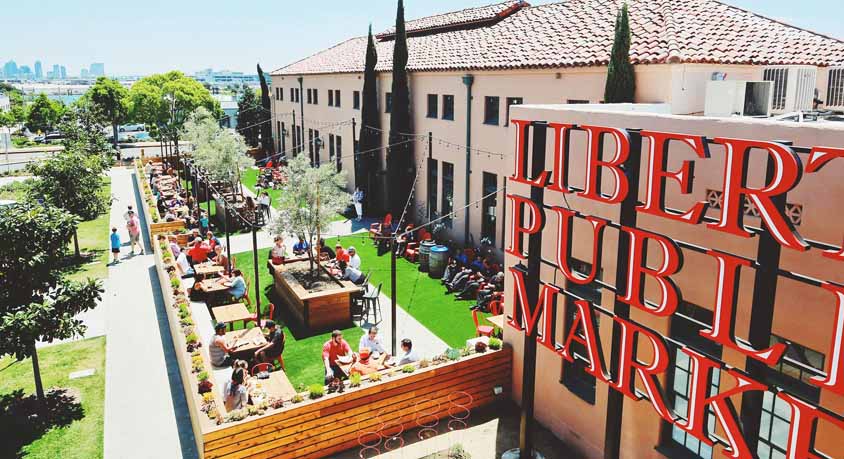
The first thing you notice, pushing through the heavy glass doors of Liberty Public Market, is the sound. Not just the clatter of plates and murmur of conversation, but the sizzle of planchas, the pneumatic hiss of espresso machines, the rhythmic thwack of a cleaver through roasted chicken skin. This cavernous space, carved from a 1940s naval training center, hums with the energy of thirty artisanal vendors all cooking at once. The assumption, reasonable given San Diego's notorious tourism pricing, is that a place this polished, this curated, must be a financial trap—a food hall version of an airport terminal where $22 buys a sad salad and a side of regret. I arrived expecting to drop $40 on lunch and leave hungry. What I discovered, by watching what the locals actually do, was a masterclass in eating like a king on a sergeant's budget in one of America's most surprisingly affordable food destinations.
The moment you start circling the stalls, the price tags tell a more complicated story than the glossy marketing suggests. A single lobster roll from The Crack Shack runs $18, and a craft cocktail from the bar hits $14. That's tourist pricing, pure and simple, and the tourists obligingly line up for it. But walk twenty feet to the market's less photographed corner, and you'll find the taco stand where three authentic Baja-style fish tacos, piled with cabbage and crema, cost $9. That's less than you'd pay for a single mediocre taco at a Gaslamp Quarter restaurant. The local move isn't to order one thing; it's to assemble a feast from the market's affordable outliers. A massive slice of pepperoni pizza from the wood-fired oven: $6. A cup of house-made pozole from the Mexican counter: $7. A craft beer from the bottle shop: $6, consumed at a communal table with no markup. For $20, you've just engineered a tasting menu that would cost $60 at any sit-down restaurant in town.
The morning strategy is even better. Liberty Public Market opens at 8 a.m., and the breakfast vendors serve real food to actual San Diegans heading to work at the nearby maritime industries. A breakfast burrito stuffed with eggs, chorizo, and potatoes runs $8—twice the size and half the price of the $16 "artisanal" version served in Little Italy. For accommodation, the surrounding Liberty Station neighborhood is a former naval training center converted into a sprawling complex of shops, galleries, and apartments.
Hotels here, like the Homewood Suites or the Residence Inn, average $200-$250 a night—roughly what you'd pay for a mid-range hotel in a city like Phoenix, but with the advantage of being a ten-minute walk from the market and a fifteen-minute drive from the ocean. Compare that to a Gaslamp Quarter hotel at $350-$500 a night, and the savings become obvious.
Transportation to Liberty Public Market is easiest with a car, but not mandatory. The MTS bus system runs several routes from downtown San Diego directly to the Liberty Station transit center, a five-minute walk from the market. A day pass costs $5, a fraction of the $15-$20 ride-share fare from the airport or downtown. Parking at Liberty Station is free and abundant, a rarity in San Diego that feels like a gift from a more civilized age.
While most visitors grab their food and grab a seat in the main hall, the real experience unfolds just outside the market's walls. Step through the back door and you're in the heart of the Liberty Station arts district, a sprawling campus of converted naval barracks now housing dozens of artist studios and galleries. On the second Saturday of each month, these studios open their doors for free evening receptions, with wine, cheese, and conversations with working artists. You can spend an entire evening wandering from a ceramicist's workshop to a painter's studio, all for the cost of a few dollars in the donation jar. A ten-minute walk north along the waterfront path brings you to the San Diego Maritime Museum's small boat harbor, where vintage yachts and historic vessels bob at their moorings. The museum charges admission, but the harbor view is free, and on clear days you can watch aircraft carriers and container ships navigate the bay while pelicans dive-bomb for dinner.
For a completely different perspective, walk south along the same path to the NTC Park at the tip of the peninsula. This sprawling green space offers panoramic views of downtown San Diego across the bay, with the Coronado Bridge arching gracefully in the distance. It's where local families fly kites on windy afternoons and couples watch the sunset with takeout from the market, a free spectacle that rivals any overpriced sunset cruise.
Finally, don't miss the Liberty Station public art installations scattered throughout the complex. The former naval chapel now houses a stunning stained glass collection, and the old parade grounds feature rotating sculpture exhibits, all completely free and utterly ignored by the tourists stuffing themselves inside the market.
Planning a visit between March and June reveals San Diego's seasonal sweet spot. March brings occasional gray skies and the famous "May Gray" hasn't yet arrived, but temperatures are pleasant and crowds are manageable. The market itself is busy on weekends but never oppressive, and the arts district's second Saturday events draw a lively but not overwhelming crowd. April offers the best balance of weather and crowds, with warming temperatures and the first real bursts of spring color in the gardens. By May, the marine layer often rolls in by late morning, burning off by afternoon—locals call it "May Gray," but it actually makes for perfect exploring weather, soft light for photos and cool enough for comfortable walking. June brings the famous "June Gloom," when coastal clouds can persist all day, but the market's indoor setting makes it immune to weather concerns. The upside of June gloom is thinner crowds at the beach and lower hotel rates as summer hasn't quite kicked in.
Your major cost is the flight into San Diego International Airport (SAN), conveniently just ten minutes from Liberty Station. Consider flying into John Wayne Airport (SNA) in Orange County if you find a significantly cheaper fare; the drive down the I-5 is about 90 minutes but offers stunning coastal views along the way. Pack layers, always. San Diego's coastal climate means a sunny morning can turn into a cloudy, cool afternoon without warning, and the market's indoor-outdoor flow means you'll be moving between climate zones constantly.