People’s vision of a Dubai vacation is a spreadsheet of luxury line items: a skyscraper hotel, a brunch buffet, a desert safari, and a mall. The idea of "nature" here is sold as a curated, air-conditioned product—a rainforest cafe, a ski slope in a mall, or a manicured golf course. When you hear of a mountain town called Hatta, a two-hour drive into the desert, the assumption is a final, expensive twist: a polished "eco-resort" built for Instagram, where you pay a fortune for the illusion of ruggedness, with every kayak rental and hiking trail carrying a hefty "experience" surcharge. I braced for a day of paying a premium to briefly escape the city's excess, only to find it meticulously repackaged and sold back to me. The reality was a fundamental inversion of the Dubai economy, a place where the most valuable commodities—silence, stark beauty, and physical freedom—were astonishingly affordable, revealing that the emirate's most dramatic contrast isn't between sand and glass, but between manufactured spectacle and raw, accessible landscape.
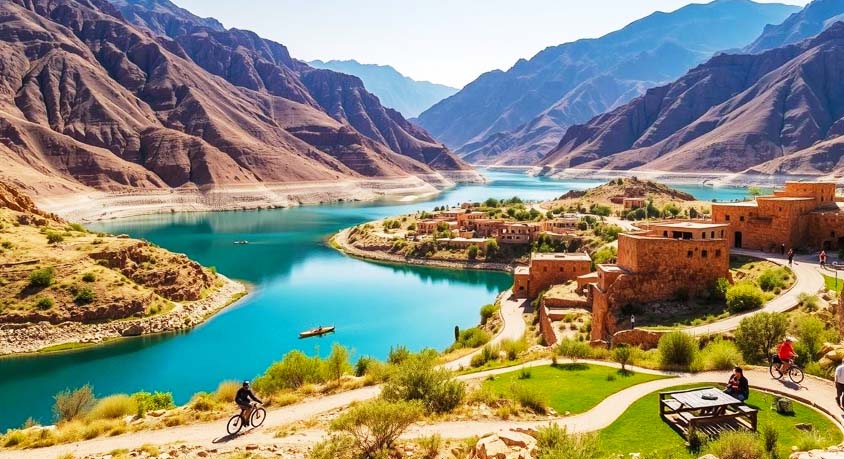
The financial pivot is the rental car. This is your single largest and most crucial expense, around $30-$50 for a 24-hour period. This investment unlocks everything. The most expensive mistake is booking a private tour, which can cost $150+ per person for the same journey. With your own car, the Hatta dam and its stunning turquoise reservoir, the gateway to the town, cost nothing to admire. Kayak rentals at the dam are a fixed, reasonable fee (around $30-$40 for an hour) for a world-class paddling experience—compare that to any "water activity" at a Dubai beach club. For food, the immediate temptation is the cafes with terraces overlooking the dam. They're decent but priced for day-trippers. The smarter move is to drive into the actual Hatta town center and find a simple Lebanese or Pakistani restaurant, where a massive, delicious mixed grill for two costs under $20, a fraction of Dubai city prices. The value chasm is between the "view premium" and the town's everyday economy.
Accommodation in Hatta presents a clear choice. You can stay at the Hatta Sedr Trailers Resort or similar glamping options, which are uniquely cool but command a premium (often $200+ per night). For that same price in the U.S., you might get a standard hotel room. The alternative, and the key to budget flexibility, is to treat Hatta as a long day trip. Stay in a budget-friendly Dubai city hotel or apartment (prices for which are very reasonable in January-April outside peak events) and drive out early. You're not paying for a mountain sleepover; you're paying for the freedom to explore on your own schedule and return to the city's cheap, diverse dining options. This strategy hinges on that rental car being your mobile basecamp.
The high-value, low-cost experiences are about leveraging the geography your rental car accesses. Beyond the dam, drive the Hatta Mountain Road (E44) towards the Oman border, stopping at any of the unofficial pull-offs to scramble on rust-colored boulders and take in the vast, Jurassic-scale views for free. Find the trailhead for the Hatta Hill Hike, a moderately challenging climb to a historic watchtower that rewards you with a 360-degree panorama of the entire valley—a payoff that costs zero dirhams. For a cultural insight, visit the Hatta Heritage Village, a restored traditional settlement with free admission, offering a quiet, thoughtful contrast to the region's hyper-modern narrative. The real luxury here is space and time, paid for in petrol and your own stamina, not in activity packages.
Visiting between January and April is the only climatologically sane window for this. This is the UAE's "winter." Daytime temperatures in Hatta are perfect for hiking and kayaking—sunny and in the 70s (°F). The sun is still intense, making sun protection and a hydration pack non-negotiable. This is peak season for outdoor activities in the region, but "peak" in Hatta means you'll share the dam with a few dozen people, not the thousands at a Dubai beach. The trade-off is that this is also when flight and city hotel prices are at their highest, but your Hatta day itself remains a budget island. You are leveraging the season's perfect weather for an active, outdoor day, an experience completely absent from the classic Dubai itinerary.
Hatta exposes the core Dubai fallacy: that every experience must be packaged and monetized. It proves that the emirate's most breathtaking scenery isn't a constructed marvel, but an ancient geological one, and accessing it requires not a premium tour guide, but a standard sedan, a sense of adventure, and the willingness to drive past the last mall. The real expense in Dubai isn't the desert or the mountains; it's the assumption that you need a middleman to experience them. Hatta strips that away, offering mountains, water, and silence for the price of a tank of gas and a chicken shawarma from a town-roundabout shop.