I spent my first hour in Belleville gripping my camera bag a little too tightly, bracing for the "gritty, unsafe" Paris that every American travel blog warns you about. I had come looking for the kind of "authentic" experience that usually ends in a trap—an overpriced espresso served by someone who hates your existence. But as I turned a corner off the Rue de Belleville, the street opened up into a sprawling, vertical gallery of spray-painted murals that made the Mona Lisa look like a boring corporate headshot. I wasn’t being hassled; I was being visually assaulted in the best possible way. This wasn’t the city of light I’d been sold; it was the city of color, and the only admission fee was the willingness to climb a few hills.
The financial reality of this neighborhood is a massive slap in the face to anyone who’s spent €15 on a mediocre salad in the 1st Arrondissement. I stood on Rue Denoyez, a canyon of ever-evolving graffiti, watching a local artist work on a piece that wouldn't last the month, and it dawned on me: the best art in Paris doesn’t live behind bulletproof glass, and it certainly doesn't cost a cent to admire. When hunger hit, I dodged the hipster cafes—which, yes, exist here and charge "Marais-level" prices for the sake of the aesthetic—and ducked into a crowded, steam-filled Chinese traiteur. For €8, I walked away with a bowl of hand-pulled noodles that had more soul than any three-course meal I’ve had near the Eiffel Tower.
Finding a place to sleep is the only time you really need to be strategic. Don’t try to force a hotel into Belleville itself; it’s a residential engine room, not a tourist hub. I booked a small, design-forward apartment in the 11th, a 15-minute walk from the heart of the action. By staying just outside the neighborhood, I avoided the tourist markup entirely and gained access to real markets where people were buying leeks, not postcards. Transportation is a non-issue unless you’re allergic to walking. I relied solely on the Metro—a single ticket got me anywhere—but mostly, I just walked. My calves were screaming by the second day, but that’s a small price to pay to avoid being stuck in a taxi listening to the aggressive honking of Parisian gridlock.
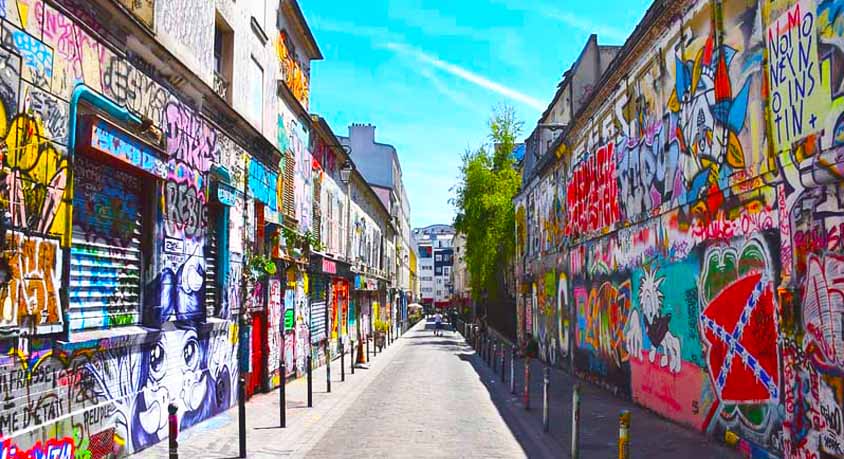
You have to look past the obvious if you want the real experience here. Everyone tells you to walk Rue Denoyez, but the real magic is hidden in the perpendicular staircases like Rue de l'Ermitage. I spent an entire morning getting hopelessly lost in those alleys, finding tiny, intricate pieces of stencil art that felt like secrets whispered only to me. After you’ve had your fill of the walls, walk up to the Parc de Belleville. It’s not just a park; it’s a panoramic viewpoint that delivers the entire city skyline for free. It lacks the shiny gift shops of the Montmartre summits, but that’s exactly why I liked it.
If you’re the type who needs perfect 75-degree weather and outdoor terrace sunbathing, you’ll hate January through April. But for me, this is the only time to see the place. The winter light is sharp and cold, cutting through the shadows of the murals in a way that makes the colors pop against the grey sky. Because it’s chilly, the crowds are non-existent. I didn’t see a single selfie stick. I shared the sidewalks with mothers pushing strollers and elderly men arguing about politics, not tourists trying to "curate" their vacation. You’ll need a heavy coat, and your hands will get cold, but you’ll have the art all to yourself.
Belleville works because it doesn't care if you like it or not. It’s a neighborhood that refuses to be a postcard, and that is its ultimate protection against the sanitized, overpriced version of Paris we’re all so tired of. I didn't come here to check items off a bucket list; I came here to see what happens when a city stops performing for its visitors and just keeps on living. You don't need a massive budget to see the real Paris, you just need to be willing to trade the safety of the guidebook for a bit of messy, vibrant reality.